
Imagine you’re scrolling through social media and someone comments, “much wow, very doge.” Or a friend texts you a photo of a scruffy little dog with the caption “this is my doge.” A few minutes later, you see a news headline about Dogecoin. Same word, three different situations — and you’re not totally sure what any of them means.
Here’s the good news: “doge” is one of the friendlier, more playful words on the internet. It almost never carries a hidden insult, and it’s rarely confusing once you know the basics. Most of the time, it points to one very specific thing — an internet meme — but it also has a centuries-old historical meaning and a modern cryptocurrency connection.
This guide breaks down the doge meaning in plain English. You’ll learn where the word came from, how people actually use it in texts and posts, how it differs from “dog,” and how to respond when someone sends a doge your way.
Quick Answer: What Does “Doge” Mean?
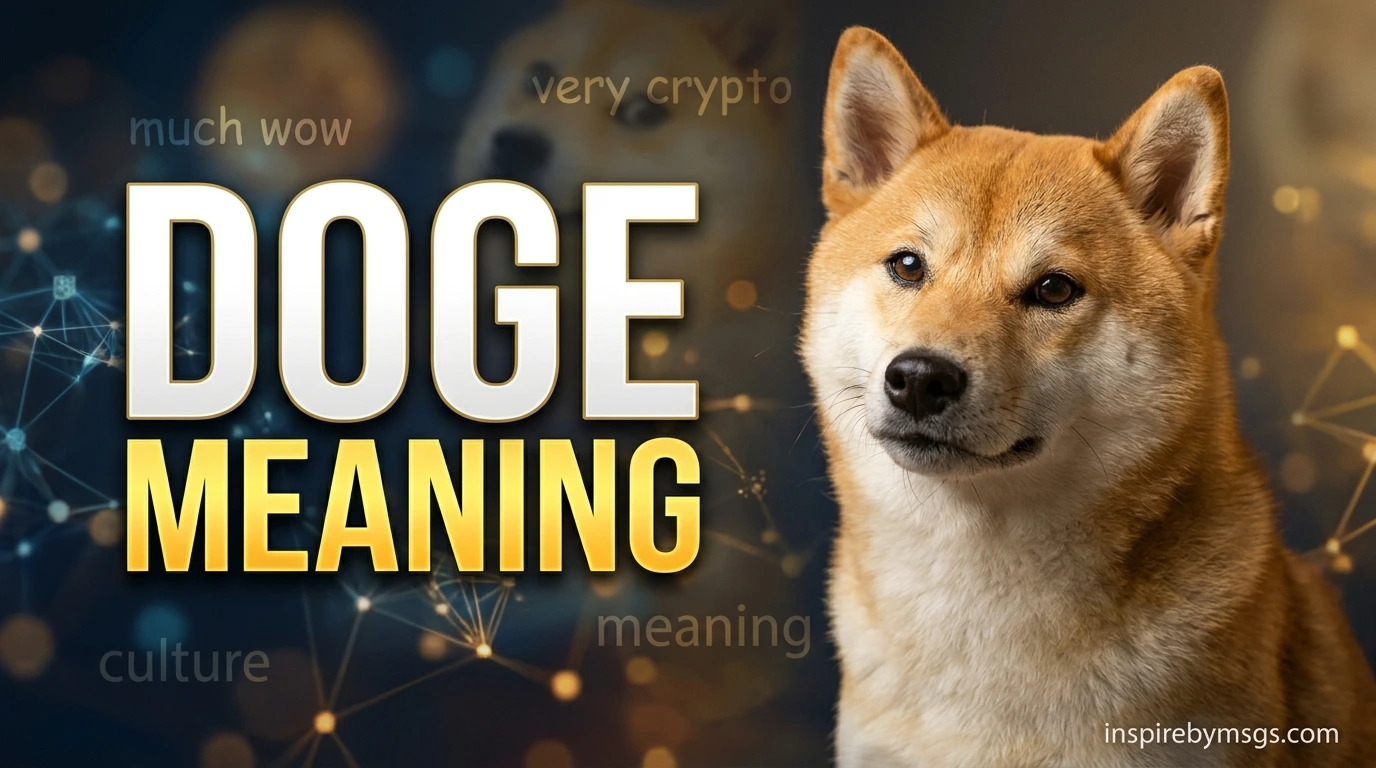
“Doge” most commonly refers to an internet meme featuring a Shiba Inu dog with a amused, side-eye expression and captions written in broken, intentionally silly English (like “much wow” and “very style”). It’s playful and informal — never a serious insult. It can also mean the historical title of a chief magistrate in Venice or Genoa, or it can refer to Dogecoin, a cryptocurrency inspired by the meme.
One simple example: a friend texts you a picture of their Shiba Inu with the caption “much sleepy, very nap.” They’re using doge as meme shorthand — affectionate, goofy, and light.
The Main Meaning: Doge as an Internet Meme
At its core, the doge meme is a picture of a Shiba Inu — usually the famous “Kabosu,” a female Shiba Inu who became the face of the meme — paired with short phrases in a deliberately broken style of English. The joke is the contrast: a dignified-looking dog “speaking” in cheerful nonsense.
The caption style is the giveaway. Doge captions typically use “much,” “very,” “so,” and “such” in grammatically odd ways:
- “much wow”
- “very doge”
- “so scare”
- “such style”
The meme’s tone is playful, wholesome, and absurd. It’s not sarcastic in a mean way, and it’s not a coded insult. It’s closer to a warm inside joke shared across the internet.
Literal vs. Figurative Meaning
Literally, “doge” is an old variant spelling of “dog” — and historically, a completely separate word meaning a Venetian or Genoese magistrate. Figuratively, in modern internet culture, “doge” means the Shiba Inu meme and its whole aesthetic. When someone says “that’s so doge,” they mean it’s meme-like, silly, or charmingly absurd — not that it’s literally a dog.
Purpose and Usage
People use doge for a few reasons:
- Humor: the broken grammar is funny on its own.
- Affection: it’s a cute way to talk about dogs, especially Shiba Inus.
- Community signaling: using doge correctly shows you’re in on the joke.
- Reaction images: a doge picture is a common way to react to something surprising or funny.
Doge vs. Dog: What’s the Difference?
This trips up a lot of beginners. “Dog” is the ordinary word for the animal. “Doge” is almost always the meme, the historical title, or the cryptocurrency. If someone texts “my doge is sleeping,” they’re being playful or meme-y — they’re not using a formal word for their pet.
A useful rule: if the context is funny, cute, or crypto-related, it’s “doge.” If it’s ordinary conversation about a pet, it’s “dog.”
How Doge Functions in a Sentence
Doge works as a noun (the meme, the dog, or the coin) and occasionally as an adjective in casual use (“that’s very doge”). It doesn’t function as a verb in standard usage, even though you might see playful one-offs online.
Examples:
- Noun (meme): “Send me that doge meme with the birthday hat.”
- Noun (crypto): “I bought a little Dogecoin — just a few doge.”
- Adjective (casual): “That outfit is so doge.”
Doge and Cryptocurrency: Dogecoin
In 2013, software engineers Billy Markus and Jackson Palmer created Dogecoin as a lighthearted joke cryptocurrency, using the Shiba Inu meme as its logo and branding. It later became a real, widely traded digital currency with a large online community.
When people say “doge” in a finance or crypto context, they usually mean Dogecoin or units of it. This is a specialist meaning — don’t assume a random “doge” mention is about crypto. Context (words like “coin,” “wallet,” “price,” “invest”) tells you which meaning is intended.
The Historical Meaning of Doge
Centuries before the internet, “doge” was the title of the chief magistrate in the republics of Venice and Genoa (the word comes from the Venetian dialect for “duke”). This meaning still appears in history books and travel writing about Italy. It’s a formal, specialist use — rare in everyday conversation, but worth recognizing so you don’t misread an article about Venetian history.
How Context, Punctuation, and Emojis Change the Meaning
Surrounding words do most of the work:
- Meme context: broken grammar (“much,” “very,” “so”), all-lowercase captions, or a Shiba Inu photo signals the meme.
- Crypto context: words like “coin,” “market,” “wallet,” or dollar amounts signal Dogecoin.
- History context: “Venice,” “Genoa,” “magistrate,” or “republic” signal the historical title.
- Pet context: “my,” “puppy,” “vet,” or a photo of a real dog signals affectionate slang.
Punctuation and emojis add tone. All-lowercase “much doge” reads as playful. Exclamation marks (“very doge!!”) make it more enthusiastic. Dog or paw emojis (🐶🐾) lean affectionate; rocket or coin emojis (🚀🪙) lean crypto. None of these change the core meaning — they just color the tone.
Examples in Real Situations
1. Texting a friend a meme
A: “rough day at work 😩”
B: [sends doge meme: “much tired, very nap”]
A: “😂 exactly”
Interpretation: B is using doge as comfort humor — playful sympathy, not advice.
2. Talking about a pet
“My Shiba is such a doge — look at that face.”
Interpretation: affectionate slang; the person means their dog looks meme-like and cute.
3. Social media caption
“so wow. very Monday. much doge.”
Interpretation: the broken grammar is the joke; it signals meme fluency.
4. Crypto chat
“I only hold a few doge, nothing serious.”
Interpretation: “doge” here means units of Dogecoin.
5. Reacting to surprising news
“Wait, the sequel got canceled? much sad, very doge.”
Interpretation: doge phrasing softens disappointment into humor.
6. Group chat inside joke
“We’re all doge today 🐾”
Interpretation: a shared, wholesome vibe — everyone’s tired and silly.
7. Comment on a friend’s photo
“very style. such outfit. wow.”
Interpretation: a compliment delivered in meme format.
8. History homework confusion
“The doge of Venice?” — “Yes, the ruler — not the dog meme.”
Interpretation: context (Venice, ruler) points to the historical title.
9. Gaming chat
“that boss fight was so doge”
Interpretation: casual slang for absurd or chaotic — playful, not an insult.
10. Responding to a doge meme
“much agree. very yes.”
Interpretation: the natural reply is to mirror the meme’s grammar.
How to Reply to “Doge”
Doge usually calls for a response, but the right reply depends on context:
- Meme sent to you: mirror the style — “much funny. very wow.” or send a doge meme back. A simple “😂” also works.
- Someone calls their pet a doge: “such a cute doge!” keeps the playful tone.
- Crypto talk: reply normally — “how much doge do you hold?” — no meme grammar needed.
- Confused about which meaning: ask lightly: “meme doge or coin doge?” It’s a fair question and rarely awkward.
If you’d rather not play along, a plain “haha, cute” is perfectly fine. Doge is low-pressure.
Doge vs. Related Terms
| Term | Meaning | How it differs from “doge” |
| Dog | The animal | Ordinary word; “doge” is the meme/slang/historical title |
| Doge meme | The Shiba Inu image + broken-English captions | The full name of the specific meme |
| Dogecoin (DOGE) | The cryptocurrency | A specific coin; “doge” can informally mean units of it |
| Shiba Inu | The dog breed behind the meme | The breed itself, not the meme |
| Wow | Expression of surprise | The meme’s signature word (“much wow”) |
Tone: Formal, Informal, Playful, or Rude?
Doge is informal and playful in almost every modern use. It is not rude or offensive — it’s one of the rare internet words with essentially no hostile edge. It is not flirtatious by default, though a cute doge meme could be sent affectionately between people who already have that dynamic; the word itself doesn’t signal romantic intent. The historical meaning is formal and specialist. The crypto meaning is neutral and technical within finance discussions.
When to Use Doge — and When to Avoid It
Good situations: texting friends, social media captions, meme replies, casual pet talk, crypto community chat.
Avoid it in: job applications, formal emails, academic writing (unless discussing the meme), legal or medical contexts, and conversations with people who may not know the meme — there, “dog” is clearer.
Common Misunderstandings
- “Doge is just a typo for dog.” No — it’s a deliberate meme word with its own history.
- “Doge is an insult.” It isn’t. It’s wholesome and silly.
- “Doge always means crypto.” Only in finance contexts.
- “Doge is pronounced ‘doge’ like ‘dodge.'” Most English speakers say it like “dohj” (rhyming with “vogue”), though you’ll hear variants.
- “Doge captions are bad grammar.” The grammar is intentionally broken for humor — it’s a style, not a mistake.
A Quick Illustrative Scenario
This is an example, not a documented case. Sam texts a photo of a Shiba Inu in a tiny hat with “much hat. very fashion.” Pat doesn’t know the meme and replies, “Is that your dog? Why is the grammar weird?” Sam explains it’s a doge meme — the broken grammar is the joke. Pat replies, “much understand. very learn.” Both laugh. The takeaway: doge is a shared joke, and asking about it is completely normal.
Origin and History (Briefly)
The doge meme emerged online around 2010 and spread through forums like Reddit and later Tumblr. The central dog, Kabosu, a Shiba Inu adopted by Japanese kindergarten teacher Atsuko Sato, became the meme’s face after photos of her circulated online. Dogecoin launched in December 2013 as a parody cryptocurrency and grew into a real project with a large community. These are well-documented milestones; treat specific “most popular” claims you see online with caution unless a reliable source supports them.
FAQs
Is “doge” a real word?
Yes — it’s an old variant of “dog” and a historical title for Venetian and Genoese magistrates. In modern use, it’s primarily the name of the internet meme.
Is doge the same as Dogecoin?
Not exactly. Dogecoin is the cryptocurrency; “doge” is the meme, and informally it can mean units of Dogecoin. Context tells you which.
Is doge rude or offensive?
No. It’s playful and wholesome. The only risk is confusing someone who doesn’t know the meme.
How do you pronounce “doge”?
Most English speakers say “dohj,” rhyming with “vogue.” Some say “dohg.” Both are common in casual speech.
Can I use doge in professional writing?
Only if you’re writing about internet culture or crypto. In formal emails and documents, use “dog” or “Dogecoin” instead.
Why do doge captions use “much” and “very”?
It’s an intentional comedic style — broken grammar makes the dignified dog seem cheerfully silly.
Does doge mean someone is flirting?
No, not by itself. A doge meme can be friendly or affectionate, but the word doesn’t signal romantic interest.
What dog is the doge meme?
A Shiba Inu — most famously Kabosu, whose photos became the meme’s defining image.
Conclusion
The doge meaning is simpler than it looks: most of the time, “doge” means the Shiba Inu internet meme — a playful, wholesome joke built on broken-English captions like “much wow.” In finance contexts it can mean Dogecoin, and in history books it’s a Venetian or Genoese title. Tone is almost always informal and friendly, never insulting. When you see “doge,” check the surrounding words: memes, coins, and history each leave clear clues. And if someone sends you one, the safest reply is a smile — or a “very wow” of your own.
